From Hand-Cut Pieces to Repeatable Game Components
Explore how casino game components moved from hand shaping toward controlled production, and learn to distinguish visible design evidence from documented history.
The common mistake in tracing the history of casino game components is to present handcraft as a single stage that machines simply replaced. A hand-cut piece, a reusable pattern, and a purpose-built tool show different ways to control form; none alone dates a change across casino equipment. For technical teacher education at Trường Đại học Sư phạm Kỹ thuật Vinh, that distinction gives students a practical way to connect design choices with evidence.
What can a hand-cut piece tell you?
A hand-cut piece preserves visible decisions: the shape of its edge, the placement of a mark, and the finish of its material. Differences between pieces may reflect individual work, but they do not automatically reveal how a casino or workshop produced them.
Ask whether a variation affects recognition, handling, or only appearance. An uneven decorative edge may not change use; a misplaced identifying mark may make the piece harder to distinguish. Describe what you can see before proposing how it was made.
How did patterns and production tools change the work?
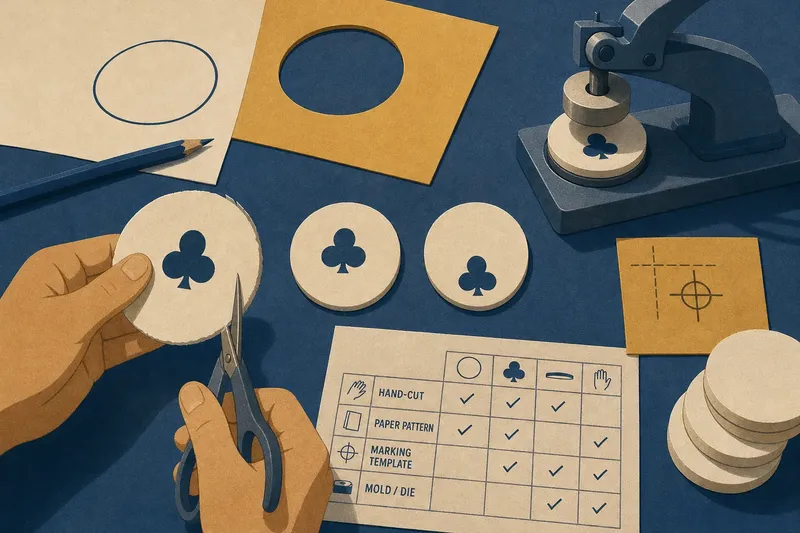
A reusable pattern transfers an outline from one piece to another. A marking template helps locate a symbol, while a mold or die shapes material through a different process. Each tool carries a design choice into repeated work, but the tools do not perform the same task.
A surviving casino object may show a consistent outline or repeated marking without identifying the tool, workshop, or date. For a historical claim, connect the object to documentation that supports the particular method. A tool also changes the maker’s task rather than removing judgment: someone still selects material, operates the tool, and inspects the result.
What historical claims can an object support?
Separate direct observation from documented history and design inference. A component with repeated markings supports a description of those markings; a dated record may support a claim about its production context. A classroom comparison can show how a guide affects shape, but it cannot establish when casinos adopted a method.
Record material, visible construction, marks, and accompanying documentation. If a source names a manufacturer or process, attribute that claim to the source. If the evidence is silent, describe the feature without supplying a confident timeline.
Put the observation and interpretation in separate sentences.
How do casino game component methods compare?
Hand shaping, guided cutting, and forming with a mold or die control different parts of production. Compare which feature each method can reproduce, what remains variable, and what evidence connects the method to casino equipment—not simply which method seems older or newer.
- Hand shaping: Observe whether outlines or finishes vary. If variation affects recognition, choose a more controlled method for a classroom comparison; if it is decorative, record it rather than calling it a functional defect.
- Paper pattern: Check whether traced outlines follow the same shape. If they do, use the pattern for that feature; if they drift, revise the tracing or cutting method.
- Marking template: Check whether symbols land in a consistent, readable position. If they do, retain the alignment rule; if they do not, add a reference point or revise the template.
- Mold or die: Check what form a source documents the tool as creating. If a reliable source links it to the object, describe that method; if not, avoid identifying the tool from appearance alone.
- Material: Observe whether the chosen material holds its shape during intended classroom handling. If it does, continue the comparison; if it bends or tears, choose sturdier classroom-safe material.
- Finished set: Check whether differences affect recognition, handling, or appearance. If function is affected, revise the design or process; if only appearance varies, record that distinction.
What questions help explain this production history?
Does a repeated shape prove a template was used?
No. Similar shapes may be consistent with a template, but appearance alone does not establish the tool or method. Describe the resemblance and seek documentation before identifying its cause.
Why does a dated source matter?
A dated source can place a described object or method in a specific context. Without one, treat claims about adoption or sequence as unconfirmed rather than infer a timeline from a classroom exercise.
Can a classroom activity demonstrate casino manufacturing?
It can demonstrate how a guide affects a chosen feature under classroom conditions. It cannot recreate commercial production or prove that a casino used the same materials, tools, or workflow.
What should students record about an object?
Record visible material, shape, markings, construction details, and the source for any historical claim. Keep direct observations distinct from interpretations about how or when the object was made.
How can students compare hand-cut and guided pieces?
Use paper or light card, pencils, a printed outline, and blunt classroom scissors where permitted. Compare pieces for a defined purpose, such as outline consistency or mark placement, and record which differences affect use.
Say a student group starts with one printed circle, one pencil, one sheet of classroom paper, and scissors. These are invented activity inputs, not evidence about casino production. The group cuts one circle by eye, traces two more with the printed pattern, then draws the same symbol freehand on all three. It compares the outlines and finds that the traced pair follow the pattern more closely, while one symbol sits lower. The group keeps the pattern for cutting and adds a placement point to its marking guide; its decision is to use the guide for the outline, revise mark placement, and describe the result only as a classroom observation.
This comparison makes a useful historical distinction visible: a tool can help repeat a feature, while the object and its documentation determine what can responsibly be said about past production.
Why study this history in technical teacher education?
At Trường Đại học Sư phạm Kỹ thuật Vinh, examining casino game components can connect design decisions to observable evidence without treating a classroom exercise as a historical source. Students can ask which form a tool helps reproduce, which choices still depend on the maker, and what documentation supports a claim about past production.
The history of casino game components is clearest when visible details come first, historical claims rest on documentation, and classroom-made objects are kept within their limits. That approach gives future technical teachers a concrete way to teach the difference between how an object looks and what its evidence can establish.